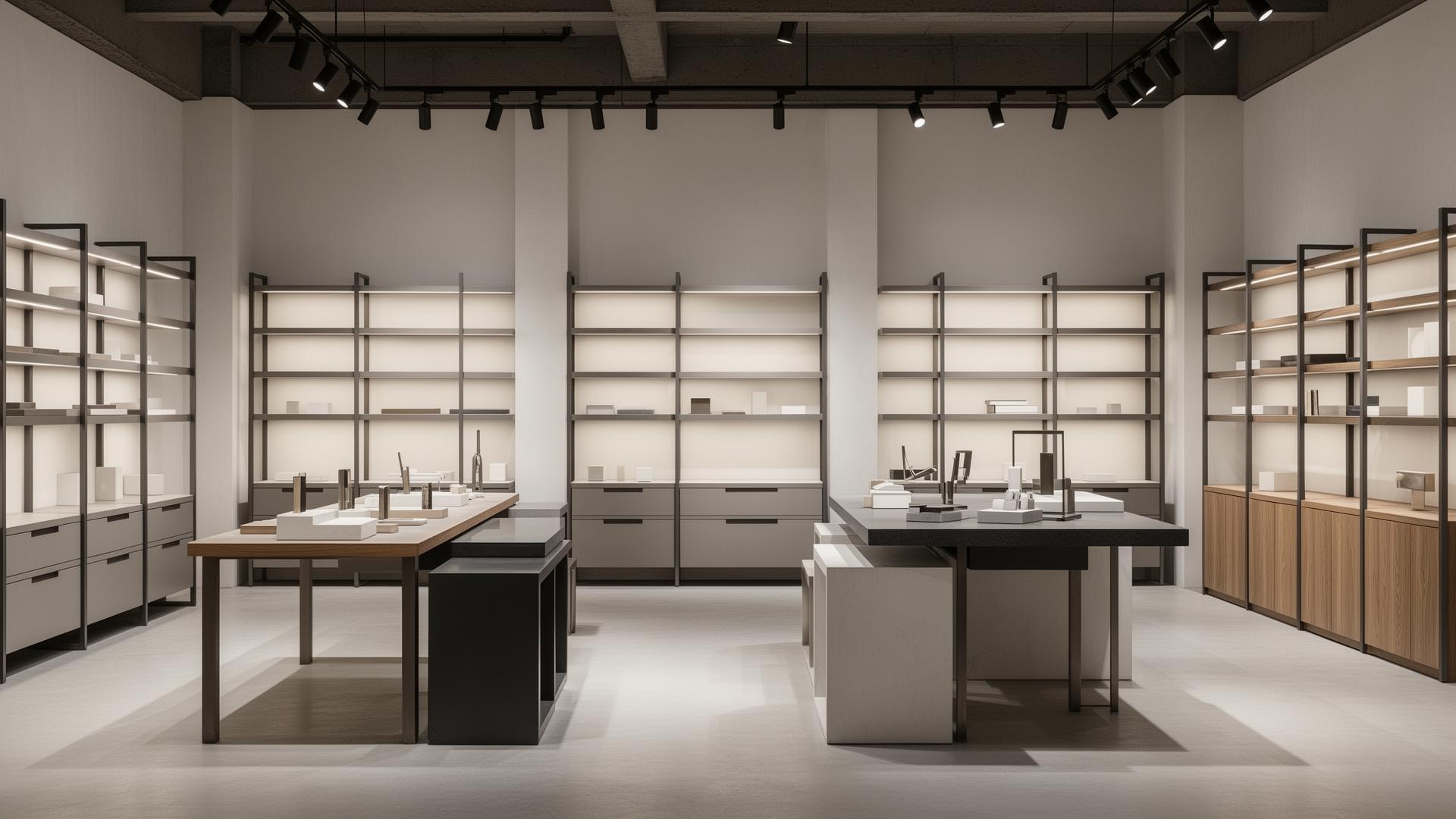
Today, commercial furniture is no longer understood simply as a set of functional pieces. It is also part of a space's identity, the customer journey and day-to-day operational efficiency. That is why its design, materials and proper implementation have a direct impact on brand perception and commercial performance.
What is commercial furniture?
Commercial furniture includes the physical elements used to display products, organize circulation, support customer interaction and structure a retail environment.
It can include display cases, counters, shelving, display tables, racks, displays, interactive furniture and custom solutions designed for a store, showroom or point of sale.
Its role is not only practical. It also helps communicate visual identity, improve the shopping experience and create spaces that are clearer, more functional and more attractive for customers.
How commercial furniture has evolved in Mexico
In Mexico, commercial furniture has roots in traditional markets, where commerce relied on simple structures to display goods and facilitate transactions.
Over time, the evolution of commerce led to more structured environments such as stores, warehouses and specialized retail spaces. During the twentieth century, the growth of modern retail and department stores introduced new needs related to product display, circulation and customer service.
Today, commercial furniture in Mexico follows a broader logic. It must do more than solve a basic functional need. It must also respond to design, durability, brand image, user experience and technical execution.
Industries that rely on commercial furniture
Commercial furniture is used across many industries, and each sector requires different solutions depending on the type of product, operation and audience.
Retail and fashion
Boutiques, department stores and fashion chains use racks, shelving, display tables, mannequins and display systems to present apparel, accessories and footwear in a more attractive and organized way.
Food industry
Supermarkets, gourmet stores and food retail environments rely on furniture that helps display, organize and support product presentation, including display cases, shelving and specialized fixtures.
Automotive
Automotive showrooms require sober, well-executed furniture aligned with a premium perception. Customer areas, tables, displays and waiting zones all contribute to the brand experience.
Health and beauty
Pharmacies, clinics and beauty stores require furniture that combines order, accessibility, safety and clear product presentation.
Technology
Electronics and technology stores often require more technical solutions, including interactive furniture, experience stations, secure shelving and systems designed for integrated functionality.
Common types of commercial furniture
Within a retail space, some types of furniture appear more often because of their practical and commercial value.
Display cases
These are used for delicate, high-value or more presentation-sensitive products. They help protect the product while keeping it visible.
Counters
Counters serve as interaction, consultation or transaction points. They also help structure the flow between the customer and the sales team.
Shelving and modular systems
These make it possible to adapt the display according to product type, product volume and the logic of the space. They are flexible solutions used in many sectors.
Display tables and merchandising fixtures
These help highlight specific products, collections or launches within the retail journey.
Interactive or specialized furniture
In some sectors, customers need to interact directly with the product. In those cases, the furniture must combine usability, durability and a strong user experience.
Materials used in commercial furniture
Material choice is important because it affects durability, aesthetics, maintenance and quality perception.
Some of the most commonly used materials include:
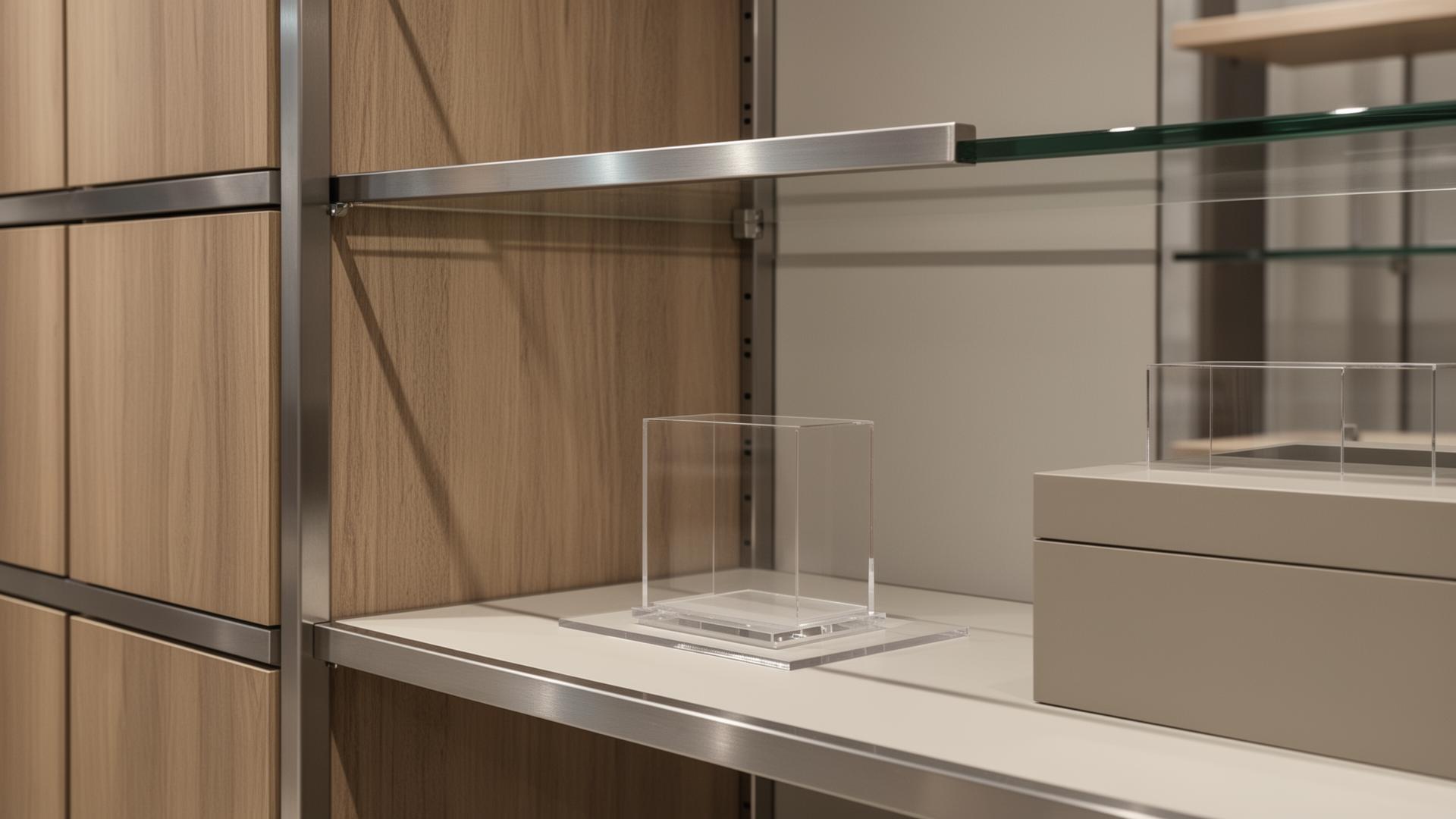
- wood and wood-based panels, for versatility and visual warmth;
- glass, commonly used in display cases and presentation systems;
- stainless steel and aluminum, valued for durability and a clean appearance;
- acrylics and technical plastics, used in displays or lightweight solutions;
- panels such as MDF, used in different types of production depending on the project.
The right material selection depends on the real use of the space, the type of product, the budget, the expected lifespan and the image the brand wants to project.
Technical specifications that matter
Commercial furniture should not be evaluated only by appearance. It must also meet technical requirements that affect how it performs in daily use.
Some key aspects include:
- load resistance, especially for heavier product displays;
- structural stability and safety;
- product protection for higher-value items;
- ergonomics in service and operational areas;
- ease of maintenance;
- material selection according to usage intensity;
- sustainability when the project requires it.
A strong commercial furniture solution combines design with technical viability. That balance is essential to avoid problems related to use, maintenance or poor quality perception.
How commercial furniture improves the customer experience
Commercial furniture does more than display products. It also shapes how customers move through the space, find information and perceive the brand.
When properly designed, it can:
- make in-store circulation clearer;
- give better visibility to selected products;
- support comparison and purchase decisions;
- make interaction with the space more comfortable;
- communicate order, quality and brand consistency.
By contrast, poorly resolved furniture can overload the environment, make circulation more difficult and weaken the overall experience.
Commercial furniture as a strategic retail tool
In retail, commercial furniture should be understood as a strategic tool, not just as equipment.
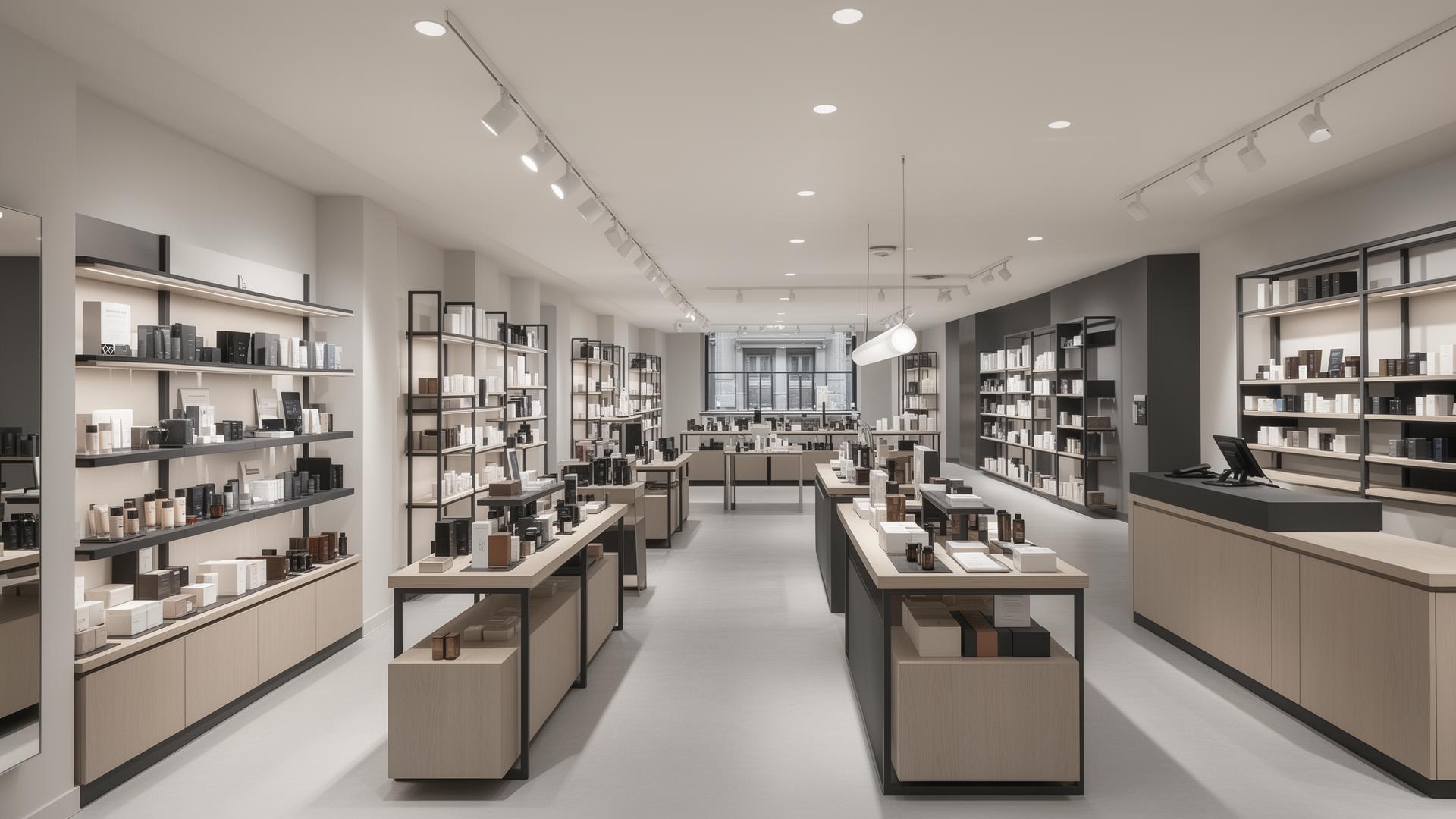
It helps structure the space, reinforce brand identity, improve product presentation and support daily operations. It can also contribute to a clearer point-of-sale environment and a more coherent execution between design, production and installation.
That is why, when developing a commercial project, furniture should be approached with an integrated logic: what it needs to communicate, how it will be used, which materials are appropriate and how it will fit into the real space.
Conclusion
Commercial furniture in Mexico has evolved alongside commerce and now serves a much broader purpose than simple product display.
It is a tool that helps organize, present, sell and build a better point-of-sale experience. Its value depends not only on design, but also on materials, functionality, durability and quality of execution.
At MRB, we understand commercial furniture as part of an integrated retail solution: a combination of design, production and installation intended to create clearer, stronger and more effective spaces for brands.