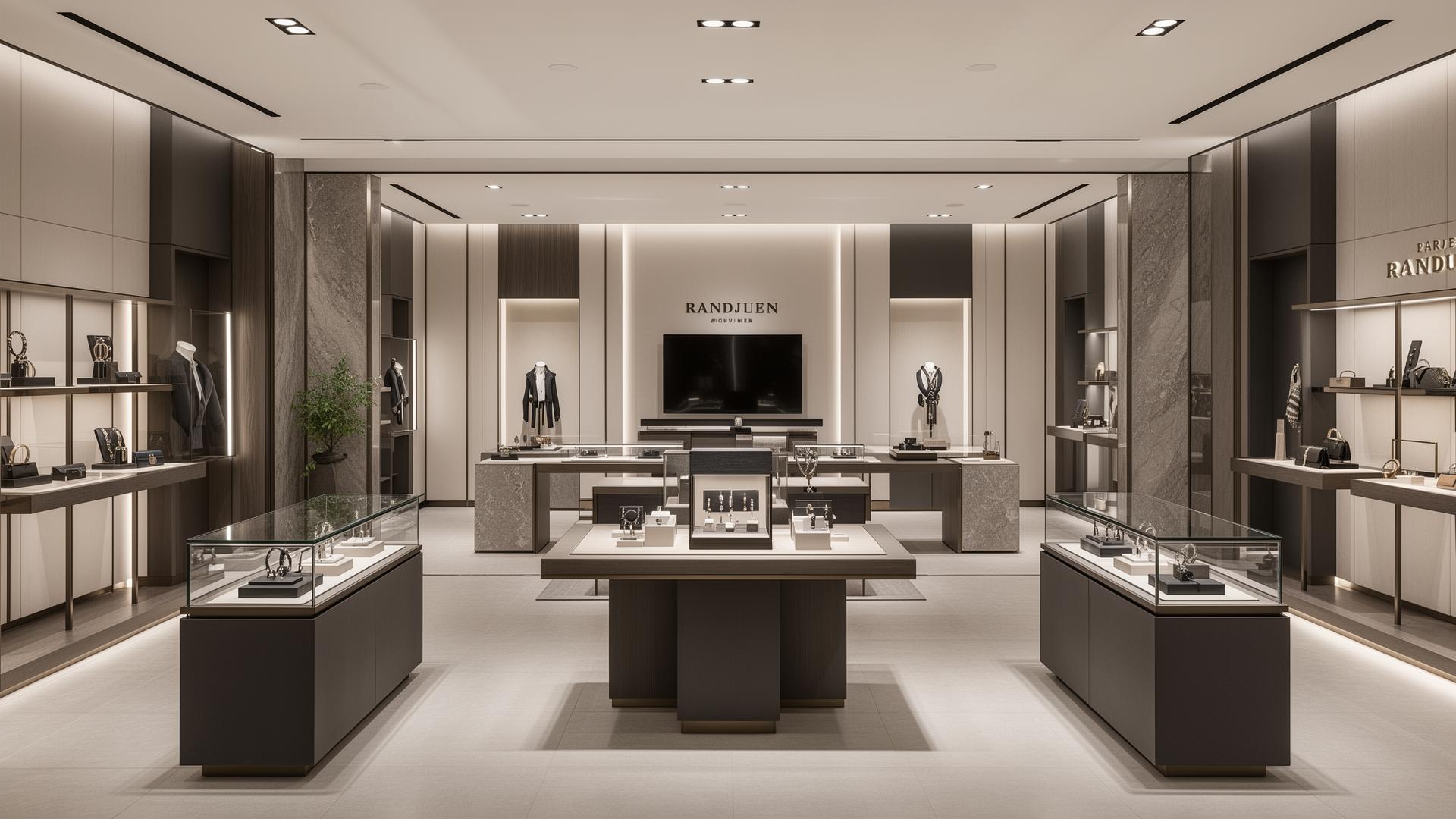
Every element of the space communicates something: the materials, the lighting, the furniture, the circulation, the technology and the way products are presented. When a showroom is well designed, the brand does not simply show what it sells. It also expresses who it is.
The showroom as a physical extension of the brand
A luxury showroom should function as an extension of the brand universe. It is not just about placing products inside an elegant space. It is about designing an experience that reinforces brand positioning.
The layout of the space, the selection of materials and the type of furniture all directly influence how the visitor interprets the brand.
A well-constructed environment can communicate precision, exclusivity, innovation, calm, sophistication or proximity. For that reason, every design decision in a luxury showroom should be intentional.
Custom furniture for luxury showrooms
Furniture is one of the most important elements inside a premium showroom. It does not simply support or display products. It also defines the visual rhythm of the space and contributes to the perception of quality.
In these types of projects, furniture should respond to three main functions:
- present the product clearly;
- reinforce the brand's visual identity;
- integrate naturally into the visitor's journey.
Poor proportions, weak finishes or unresolved lighting can affect product perception, even when the brand itself has a strong identity.
Materials, finishes and perception of value
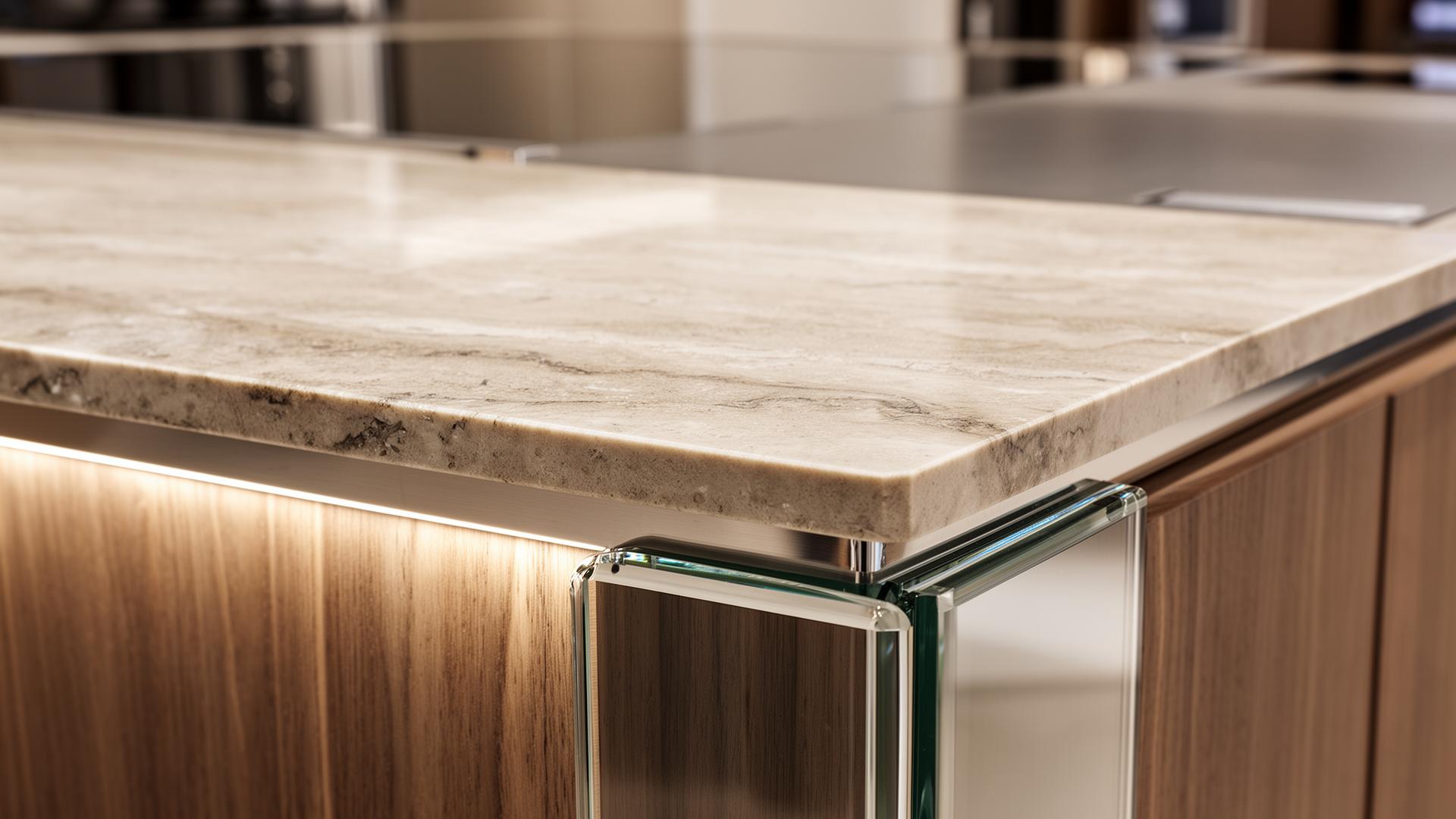
In a luxury showroom, materials play a central role. Stone, wood, metal, glass, acrylic, technical textiles or specialized finishes can all be used to create a more precise and more premium atmosphere.
However, luxury does not depend only on the cost of the material. It also depends on the coherence between materials, proportions, lighting, finishes and the real use of the space.
A sober design, well executed and technically clean, can communicate more value than a visually overloaded solution. The key is to ensure that every material serves a clear purpose within the whole environment.
Minimal design, with presence
Many premium brands use a minimalist visual language because it allows the product to breathe and directs the visitor's attention toward what matters most.
But minimalism does not mean emptiness. A luxury showroom needs balance, proportion and presence.
Clean lines, controlled lighting and custom furniture help build a sophisticated environment without saturating it. The goal is to avoid distractions and create a clear visual experience where every area has a purpose.
Customization and brand coherence
In the luxury sector, furniture and space customization are essential. Brands want the showroom to reflect their visual identity, tone, codes and way of engaging with the client.
This may include:
- a specific color palette;
- materials associated with the brand;
- recognizable shapes and proportions;
- custom vitrines or display furniture;
- private areas or more personalized consultation zones;
- visitor flows designed around a particular experience.
Customization should not be decorative for its own sake. It should help make the space recognizable, coherent and functional.
Digitalization and immersive experiences
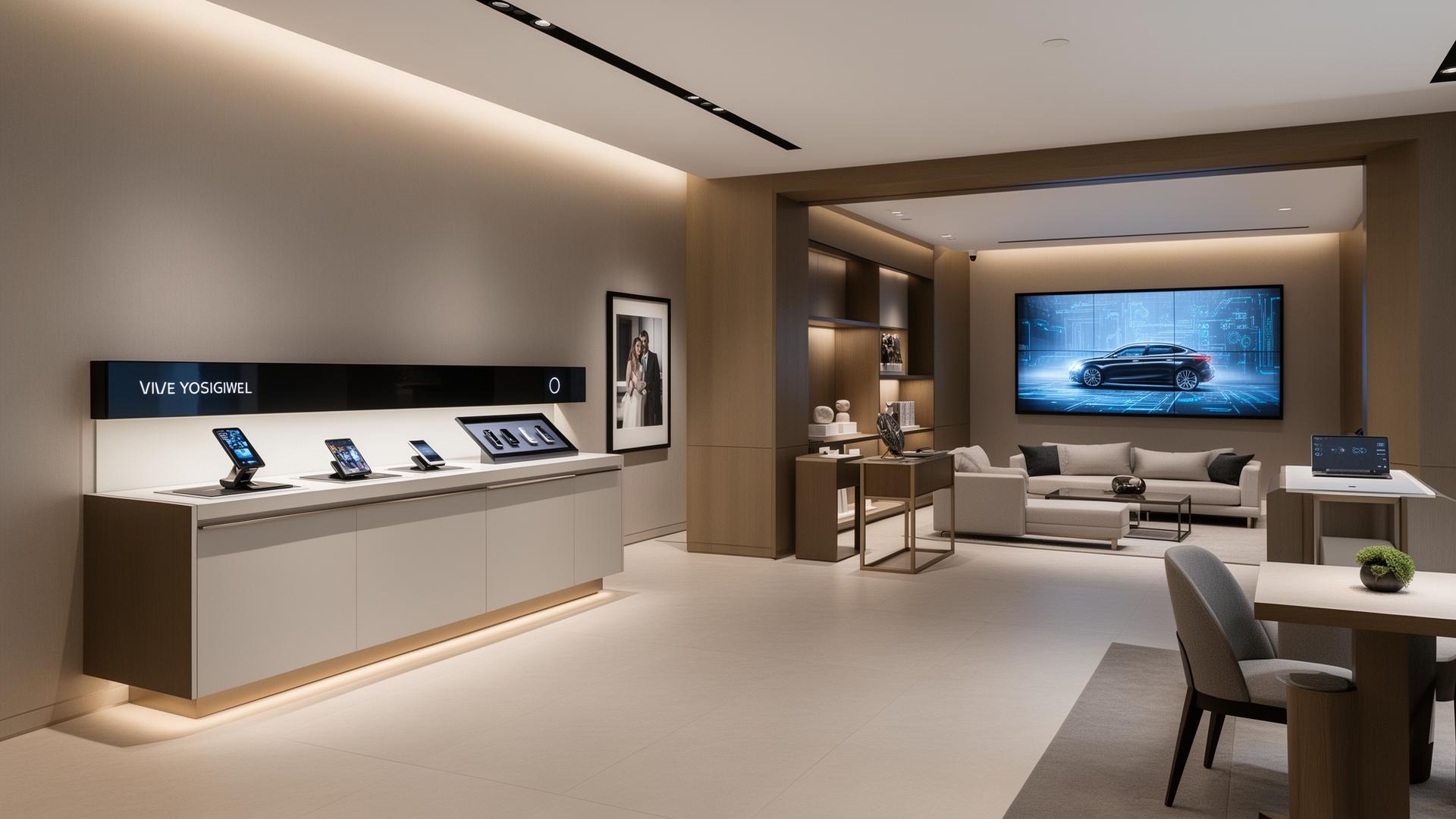
Luxury showrooms are also integrating digital tools to enrich the visitor experience.
Augmented reality, interactive screens, audiovisual content, digital walkthroughs or integrated information systems can help explain products, present variations or reinforce brand storytelling.
But technology must be used carefully. In a premium environment, a poorly integrated screen or an unnecessary interaction can weaken the sense of exclusivity. Digitalization works best when it is integrated in a discreet, useful and coherent way.
Sensory experiences and visitor journey
A luxury showroom is also shaped through experience. Light, acoustics, material texture, circulation space and the pace of the journey all influence how the visitor perceives the environment.
When these elements are resolved properly, the visit becomes more fluid, more memorable and more aligned with the level of expectation associated with the brand.
In some cases, elements such as fragrance, ambient sound or private areas can also be introduced, as long as they support the experience rather than create a decorative effect.
How the showroom strengthens premium brand perception
The showroom acts as a physical extension of the brand's positioning. It does not only present a collection or an offer. It also communicates detail, consistency, control and vision.
When the space is well designed, the visitor perceives a brand that feels stronger, clearer and more reliable.
Premium perception does not depend only on the product itself. It also depends on the context in which that product is presented. For that reason, the showroom can become a key tool for reinforcing identity, creating differentiation and building a stronger connection with clients, buyers or business partners.
Conclusion
The future of luxury showrooms lies in spaces that are more precise, more coherent and more closely connected to brand identity.
Custom furniture, material selection, technological integration and visitor experience all belong to the same logic: building a clear, premium and consistent perception.
A well-designed showroom does not simply display products. It reinforces positioning, communicates value and turns space into a brand experience.
At MRB, we understand the showroom as a strategic tool in which design, production and installation must work together to build strong and memorable commercial environments.