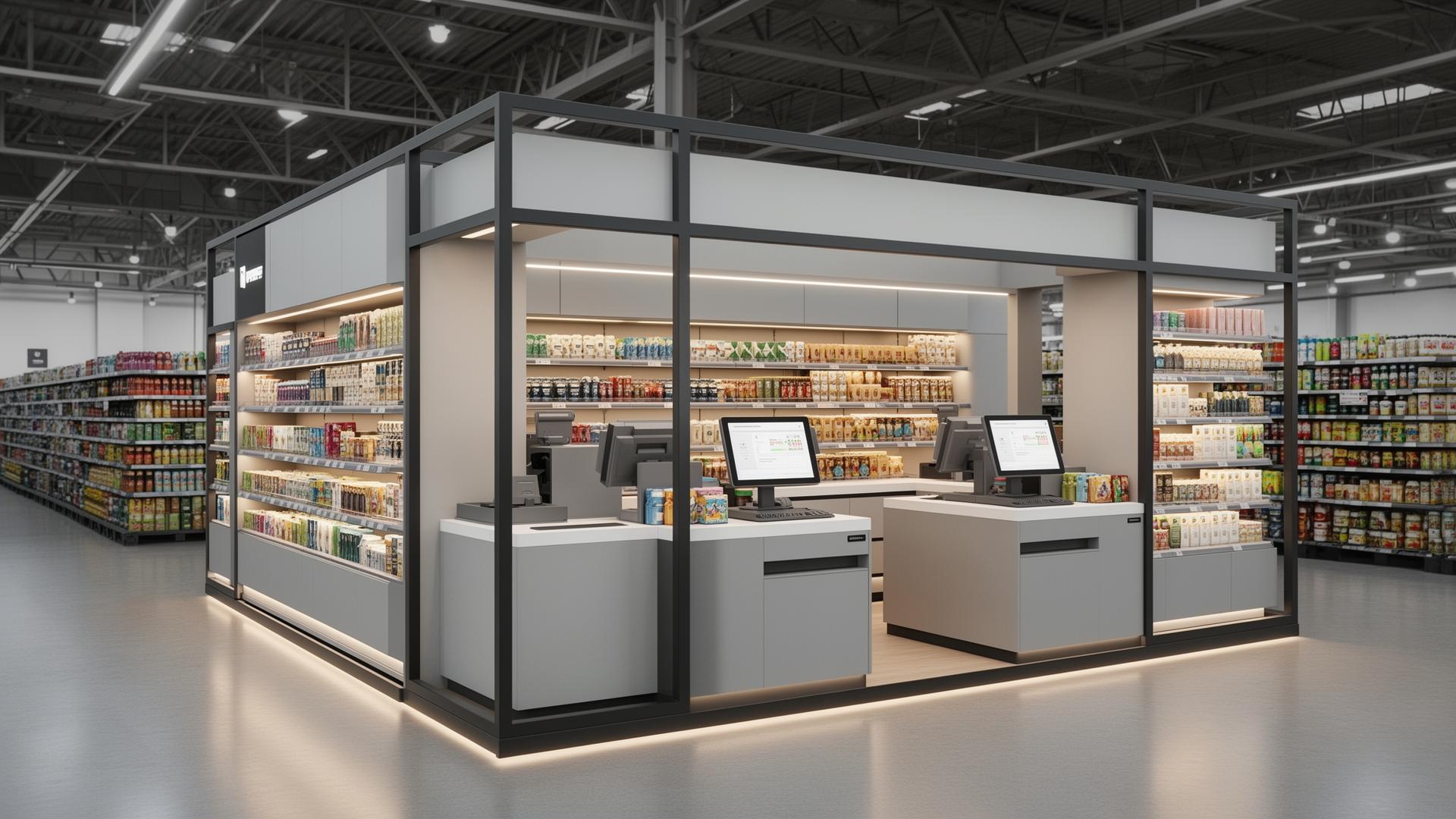
In this context, P.O.P. —point-of-purchase advertising— remains a key tool. Its role has evolved from a basic visual support into a more complete system involving design, materials, commercial furniture, technology and installation.
What is P.O.P. in consumer goods retail?
P.O.P. refers to the elements designed to highlight products, promotions or brand messages inside the point of sale.
It can include displays, standees, shelf stoppers, product islands, commercial furniture, graphic materials, digital screens or interactive solutions.
Its objective is simple: to make the product more visible, easier to understand and more attractive at the exact moment when the consumer makes a purchasing decision.
In supermarkets, convenience stores, pharmacies, department stores and commercial spaces, P.O.P. helps organize brand communication and improve product presence in a competitive retail environment.
From traditional signage to modern displays
For years, P.O.P. relied mainly on signage, printed materials, decorated shelves and simple promotional visuals.
These resources still exist, but expectations have increased. Today, a brand needs stronger, better designed solutions adapted to the real conditions of the retail environment.
Modern displays can combine structure, lighting, graphics, resistant materials and a more precise user logic. The goal is no longer simply to place a visible message, but to build a clear and coherent brand presence within the commercial space.
Promotion techniques at the point of sale
In consumer goods retail, promotions remain an important tool to activate sales. However, their effectiveness depends on how well they are integrated into the space.
Some of the most common techniques include:
Discounts and limited-time offers
These remain useful to create urgency and attract price-sensitive consumers. They work better when supported by clear and well-positioned visual communication.
Cross-promotions
Cross-promotions make it possible to group complementary products and increase the average transaction value. To work properly, the display or presentation area must make the offer easy to understand.
Product sampling and tastings
These are especially relevant in food and beverage retail. They help build trust, reduce hesitation and create direct interaction between the consumer and the brand.
Interactive dynamics
Contests, simple games or in-store activations can increase consumer engagement. However, they must be executed carefully to avoid saturating the space or weakening the shopping experience.
Common P.O.P. materials and solutions
The evolution of P.O.P. is also visible in the choice of materials. The material influences durability, cost, quality perception and ease of installation.
Common solutions include:
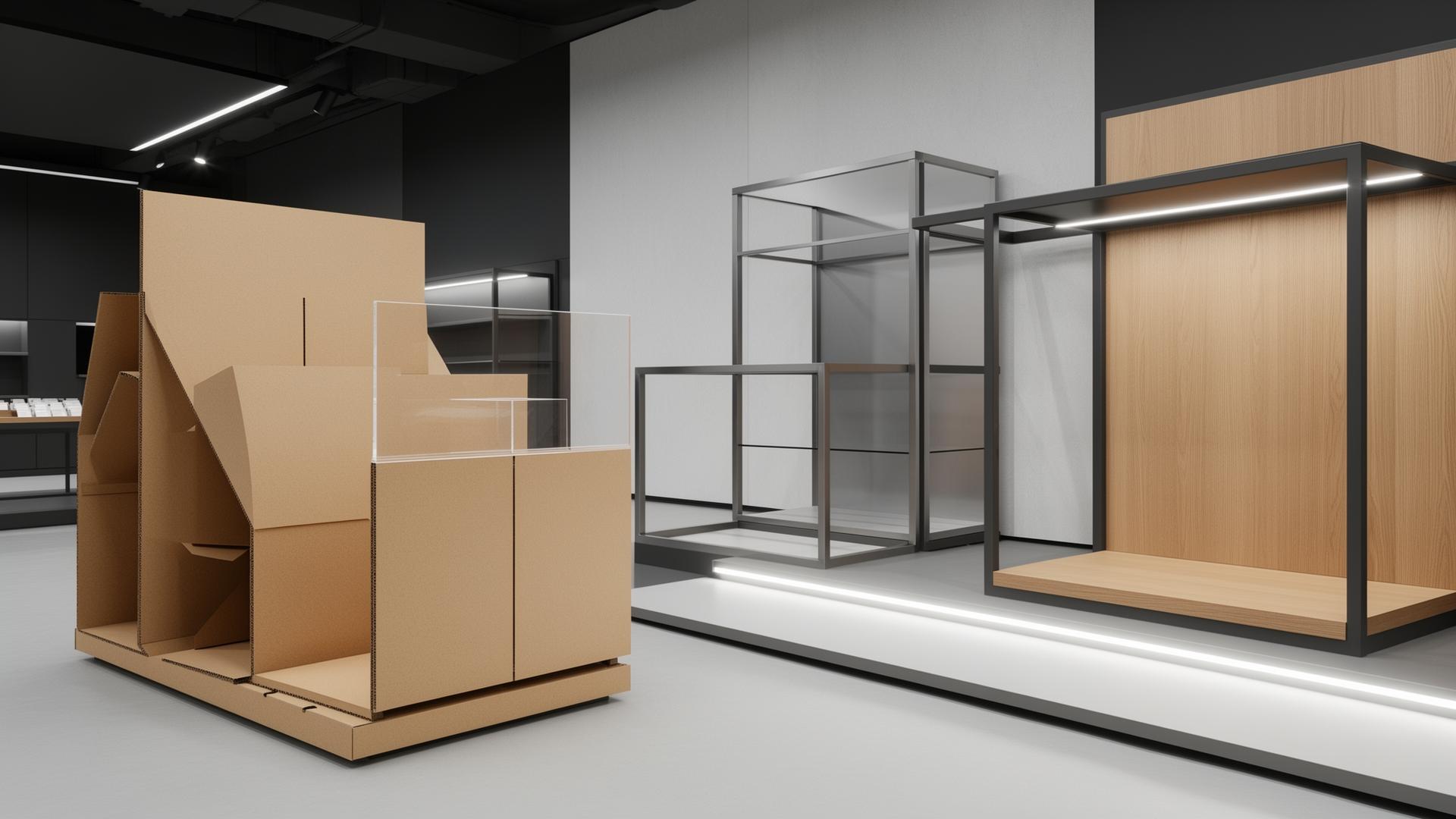
- structural cardboard for temporary campaigns;
- wood and wood-based materials for more solid displays;
- acrylic for clean and resistant presentations;
- metal for durable structures;
- PET and recyclable materials when the project requires a more sustainable solution;
- LED lighting to highlight products or specific messages;
- digital screens for dynamic content.
The key is not only to choose an attractive material. The decision must respond to the real use of the point of sale, the exposure time, the budget, the flow of people and the brand identity.
Digital integration at the point of sale
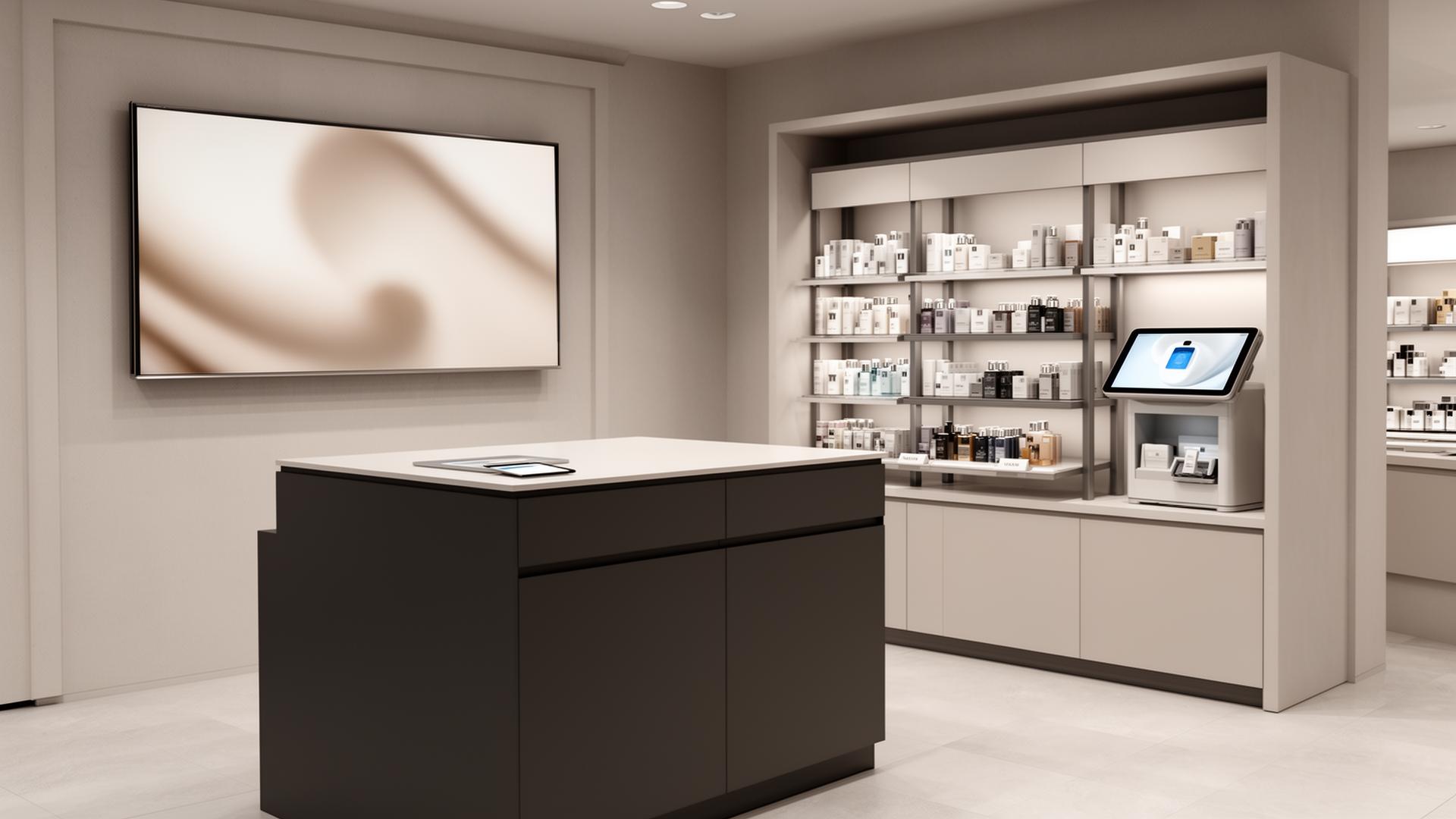
Digitalization has expanded the possibilities of P.O.P. Today, the point of sale can include screens, sensors, dynamic content and connected solutions.
This allows communication to become more flexible and enables brands to adapt their messages according to campaigns, seasons or commercial needs.
Some digital solutions used in retail include:
- screens with updateable promotions;
- electronic price tags;
- interactive devices;
- audiovisual content integrated into displays;
- sensors to measure traffic or dwell time;
- tools to analyze in-store behavior.
These technologies do not replace physical design. They complement it. A poorly integrated screen or a device without a clear purpose can weaken the experience. Technology must serve the consumer journey, not become another decorative element.
Artificial intelligence, data and the shopping experience
Artificial intelligence and data analysis are also influencing retail. Their application can help brands better understand consumer behavior, anticipate trends and optimize product placement.
In some environments, these tools make it possible to analyze foot traffic, identify areas of higher attention or personalize commercial messages.
However, their value depends on coherent execution. Technology alone does not guarantee a better experience. To be effective, it must be integrated with a clear strategy for design, furniture, visual communication and installation.
Toward a more strategic use of P.O.P.
The future of P.O.P. does not depend only on adding more screens or more technology. It depends on designing smarter, more useful solutions that are better integrated into the commercial space.
A strong P.O.P. solution should answer several questions:
- What does the brand need to communicate?
- Where does the purchasing decision happen?
- What type of consumer moves through this space?
- Which materials are appropriate for real use?
- How will the solution be installed and maintained?
- How visible will it be within the retail environment?
When these questions are addressed from the beginning, P.O.P. stops being a simple promotional support and becomes a strategic tool within retail.
Conclusion
Consumer goods retail will continue to evolve, but the point of sale will remain a decisive space for brands.
Point-of-purchase advertising, displays, commercial furniture and digital solutions are all part of the same logic: creating presence, clarity and trust at the moment of purchase.
To achieve this, it is not enough to design something visually attractive. It is necessary to consider the space, materials, production, installation and the full consumer experience.
At MRB, we understand P.O.P. as part of an integrated retail solution: a combination of design, production and installation created to help brands present themselves with greater precision at the point of sale.