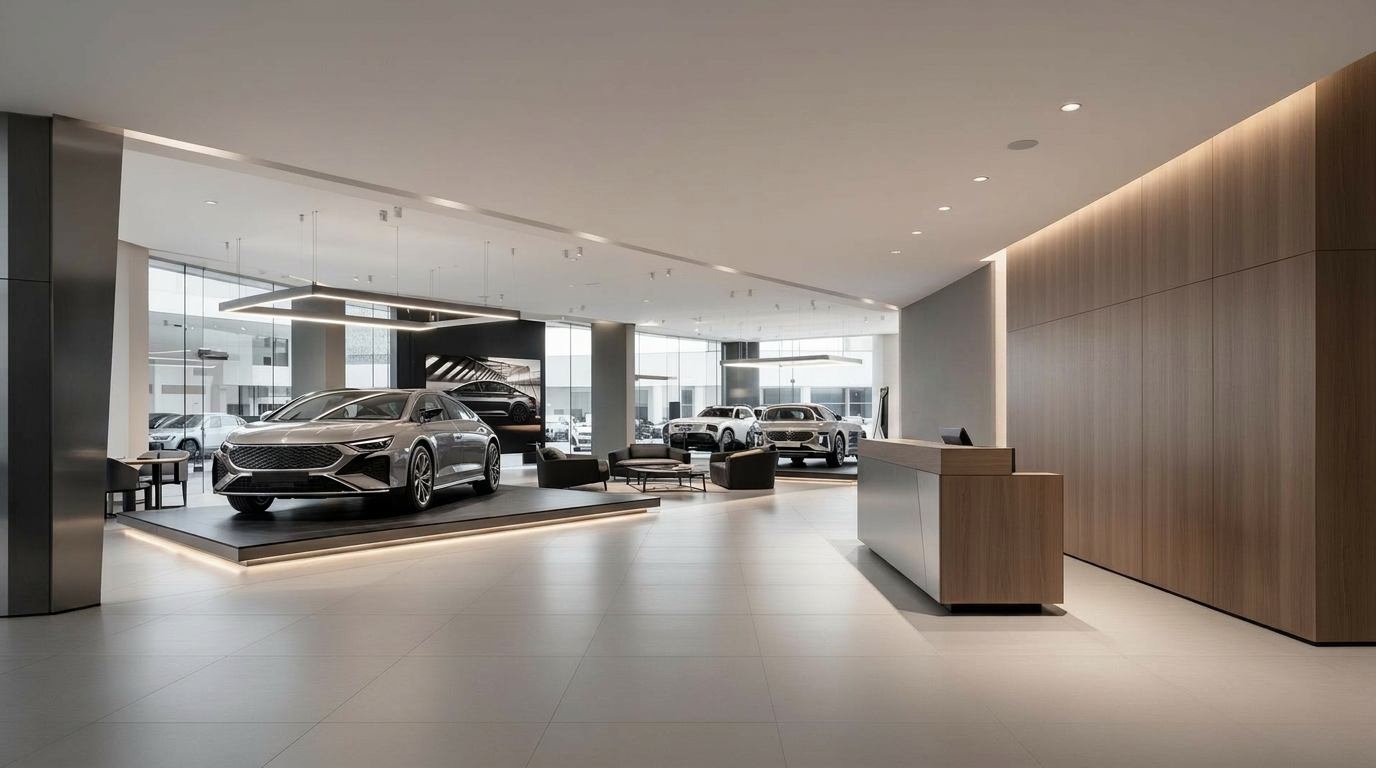
A showroom's visual identity is built through multiple elements: furniture, displays, materials, signage, screens, lighting, circulation and customer service areas. When all these components follow the same logic, the space becomes clearer, more memorable and more effective for the customer experience.
What is visual identity in an automotive showroom?
Visual identity is the set of graphic, physical and aesthetic elements that allow a brand to be recognized and differentiated from others.
In an automotive showroom, this identity is not limited to the logo or corporate colors. It is also expressed through the design of the space, the type of furniture, the way vehicles are displayed, signage, materials, lighting and the way customers move through the environment.
A well-executed showroom should make the brand feel consistent from the first visual contact to the final interaction.
From brand strategy to physical space
Before it reaches the showroom, visual identity usually goes through a strategic definition process.
This process may include:
- market and competitor analysis;
- definition of the target audience;
- review of the brand's mission, vision and values;
- development of visual concepts;
- selection of colors, typography and materials;
- creation of usage guidelines;
- adaptation of the identity to the physical environment.
The goal is not only to create an attractive image. The identity must be clear enough to be applied across advertising, digital communication, points of sale, graphic materials and physical spaces such as showrooms.
The role of brand guidelines
Brand guidelines define how a brand's visual identity should be applied.
In the automotive sector, these guidelines may define logo usage, colors, typography, materials, signage, the placement of certain elements, the visual tone of the showroom and the rules required to maintain consistency across different locations.
These documents are usually developed by branding, design or marketing teams, sometimes with specialized agencies. Their value lies in reducing improvisation and ensuring that the brand looks consistent wherever it is implemented.
Physical elements that shape showroom identity
The visual identity of an automotive showroom is expressed through different physical components. Each one has a practical function, but it also communicates a brand perception.
Customer service furniture
Reception desks, counters and consultation tables help structure the first point of contact with the customer. They must be functional, comfortable for the team and consistent with the level of the brand.
Display tables and showcases
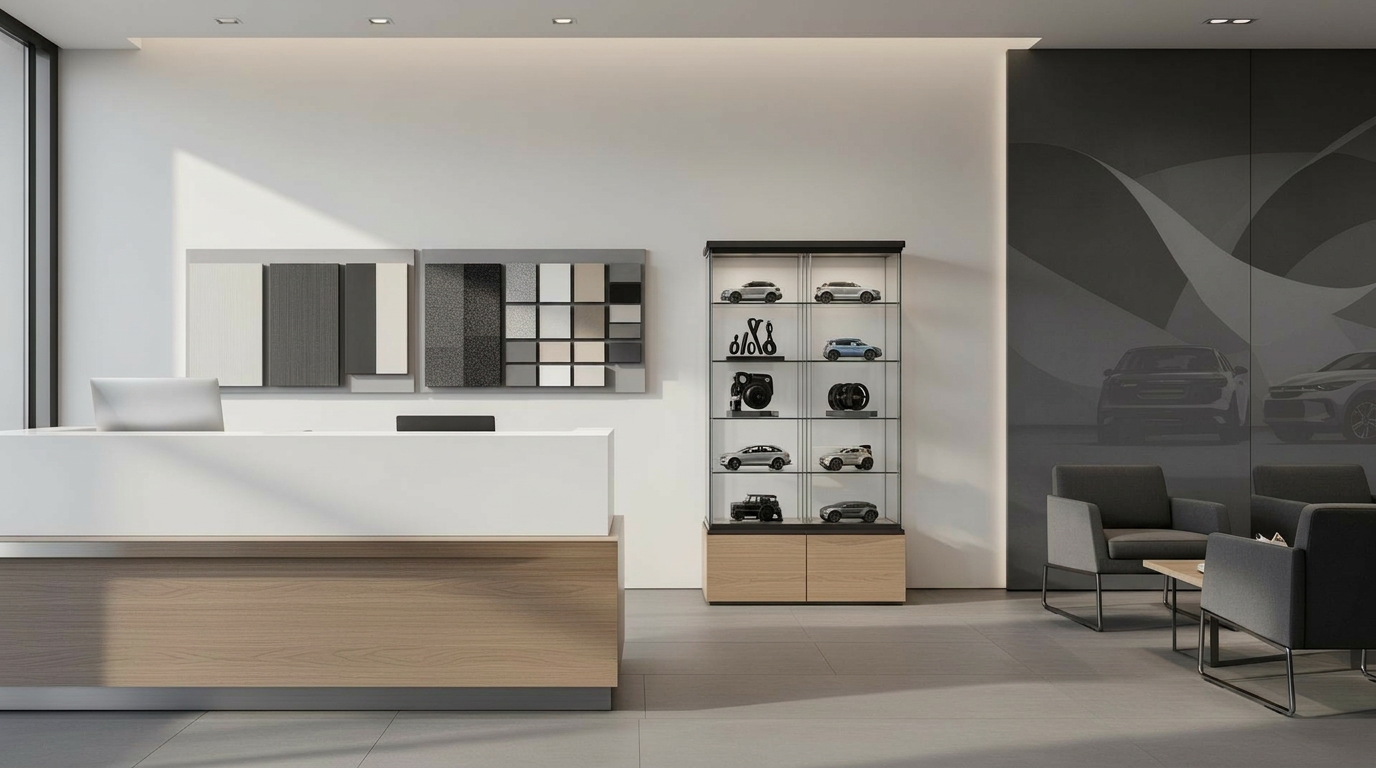
Tables, showcases and displays are used to present accessories, materials, catalogs or complementary products. Their design should maintain a clear relationship with the rest of the space.
Waiting areas
Chairs, sofas and coffee or lounge areas contribute to the customer experience. In automotive brands, these areas should communicate comfort, order and trust without breaking the visual identity.
Vehicle displays
Platforms, ramps or highlighted areas help present specific vehicles. Their integration must consider visibility, circulation and the perceived value of the product.
Material and finish samples
Paint, upholstery, finish and accessory samples allow customers to explore customization options. These elements should be easy to consult and well integrated into the showroom journey.
Graphic elements and signage
Graphic elements help guide, inform and reinforce brand identity inside the showroom.
They may include:
- internal signage;
- wall graphics;
- banners or promotional supports;
- adhesive vinyls;
- catalogs and brochures;
- communication elements for launches;
- indicators for service, display or consultation areas.
The challenge is balance. Too much graphic communication can overload the space. Too little communication can make the journey confusing. Signage should remain clear, sober and consistent with the brand experience.
Digital elements in automotive showrooms
Digital integration has become increasingly common in showrooms.
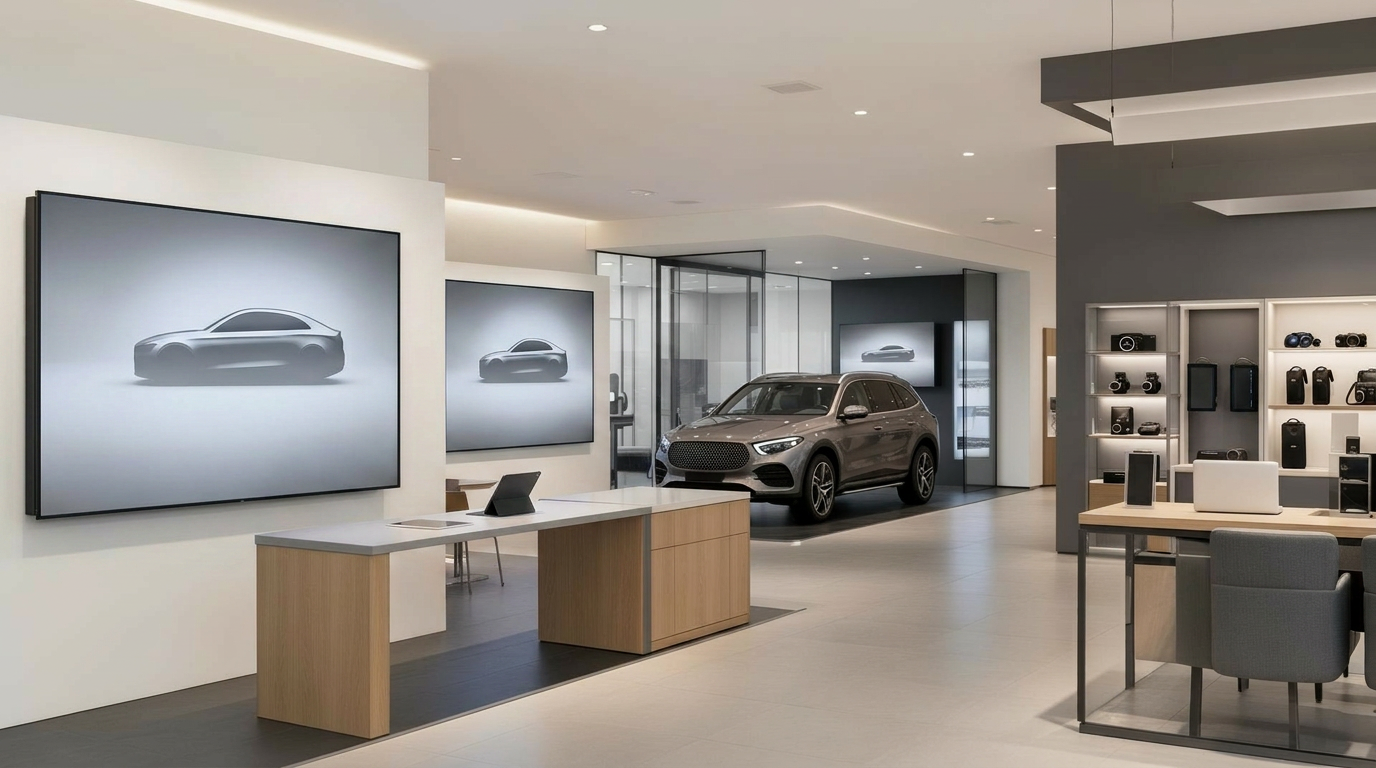
It may include LED screens, interactive monitors, digital kiosks, audiovisual content, vehicle configurators or content distribution systems.
These tools can improve the experience when properly integrated. They can provide information, compare models, present versions or support campaigns. But they must be used carefully: technology should support the customer's decision, not become a visual distraction.
Rotation and updates of visual identity
A showroom's visual identity is not necessarily fixed forever. Brands may update certain elements when campaigns, launches, global guidelines or commercial strategies change.
Some changes may be limited, such as a new seasonal graphic or a dedicated area for a specific model. Others may be more structural, such as a full update of furniture, signage or the showroom experience.
What matters is that every adjustment remains consistent with the brand and can be implemented in a controlled way.
Goals of a well-implemented visual identity
A well-applied visual identity inside an automotive showroom can support several objectives.
These include:
- strengthening brand recognition;
- differentiating the experience from competitors;
- improving perceived quality;
- making the customer journey clearer;
- creating a more organized and memorable experience;
- supporting the presentation of vehicles, accessories and services;
- maintaining consistency across different brand touchpoints.
Showroom design should not be treated as decoration. It should be part of a broader brand experience strategy.
Implementation: from design to installation
The physical implementation of a visual identity requires coordination.
A project may include design, furniture production, graphic development, display fabrication, digital integration, logistics and installation inside the showroom.
For the final result to feel consistent, every stage must follow the same guidelines. A strong visual idea can lose value if production, materials or installation are not properly executed.
That is why, in showroom projects, technical precision and operational coordination are just as important as the creative concept.
How to measure the impact of visual identity
The impact of visual identity can be assessed through different indicators.
Useful criteria may include:
- brand recognition;
- customer satisfaction;
- clarity of circulation inside the showroom;
- time spent in the space;
- interaction with staff;
- interest in highlighted models or accessories;
- perceived quality of the environment;
- consistency between the showroom and other brand touchpoints.
These indicators help determine whether the space not only looks good, but also contributes to a better commercial experience.
Conclusion
Visual identity in an automotive showroom is much more than a graphic application. It is the combination of strategy, design, furniture, displays, materials, technology and installation.
When these elements are properly integrated, the showroom communicates the brand's personality more clearly, improves the customer experience and strengthens perceived quality.
At MRB, we understand showrooms as complete commercial environments, where every physical element must have a clear function and a coherent execution aligned with the brand.